


Pokémon GO
Niantic, Inc.
I still remember why Pokémon GO feels different from most mobile adventure games: it asks me to look up from the screen and pay attention to the place around me. The basic idea is simple—discover Pokémon worldwide—but the experience becomes more interesting when a short walk, a familiar street, or a stop during an ordinary errand turns into a reason to explore. Niantic, Inc. has built the game around that mixture of collecting, movement, and location-based discovery.
It is free to start, suitable for Everyone, and available for devices running Android 9 or later. The game has reached over 500 million installs, with a 3.9 average from around 15 million ratings and close to one million written reviews. Those figures explain its lasting visibility, but they do not tell you whether it matches your habits. In my experience, it is best for people who enjoy gradual progress and occasional surprises rather than players looking for a tightly scripted adventure that can be completed indoors in one sitting.
What the first session is really like
The opening minutes are more practical than dramatic. You create or enter your player identity, learn the basic map, and begin seeing the game’s version of the world around you. The important adjustment is understanding that the map is not merely a backdrop. Your surroundings influence what you can do, so the game makes more sense when you are willing to move through real places instead of treating it like a conventional menu-driven role-playing game.
Related News

Candy Crush Saga Is Forgiving Until Failure Becomes Unclear

CapCut Mastery: Unleash Hidden Features for Pro-Level Editing

Hero Wars: Alliance Shows What Mobile RPG Players Expect Now
My advice is to begin with a short, familiar route rather than planning an ambitious outing. A walk around a block, through a public park, or along a normal commute is enough to learn the rhythm. Keep the phone visible only when it is safe, and pause before crossing roads or entering busy areas. The most enjoyable discoveries usually come from fitting the game into an existing routine, not from staring at the map continuously.
The map can feel busy at first. There are Pokémon to notice, locations to interact with, and several menus that become more useful as you play. You do not need to understand every icon immediately. The first meaningful goal is simply to catch one Pokémon successfully, then check what changed in your collection. That small loop teaches more than trying to memorize every system before taking action.
Related News

Why WhatsApp Messenger Still Makes Everyday Communication Feel Easy

Jurassic World: The Game Is the Better Dino Tycoon for Strategic Players

Threads in Real Life: Who Should Join, Lurk, or Leave

How SHEIN Turned Shopping Into an Endless Content Feed

How to Make Fortnite Feel Smarter on Mobile

Should You Switch to Microsoft Outlook on Mobile?
One detail new players often underestimate is battery and attention. Because the game uses location and camera-based interactions, a long session can be more demanding than a quiet puzzle game. I prefer short sessions spread across the day. This also makes discoveries feel less repetitive and gives the game a natural place in a walk, lunch break, or trip to a nearby shop.
Setting up without making the game feel complicated
After installing it, I would first choose a username I can live with and take a moment to understand the account screen. Progress in a collection game matters, so it is worth knowing how you sign in and how your account is connected before investing much time. I would also avoid rushing through every tutorial prompt. Some explanations are easy to forget, and the game’s many screens make more sense after you have performed the action they describe.
The first setup is not difficult, but it rewards patience. Give the game permission to use the functions it needs for its location-based play, and make sure location services are available when you want to explore. If the map does not behave as expected, I would check the phone’s location setting, connection, and battery-saving restrictions before assuming the game is broken. Location games are especially sensitive to those everyday phone settings.
Gallery
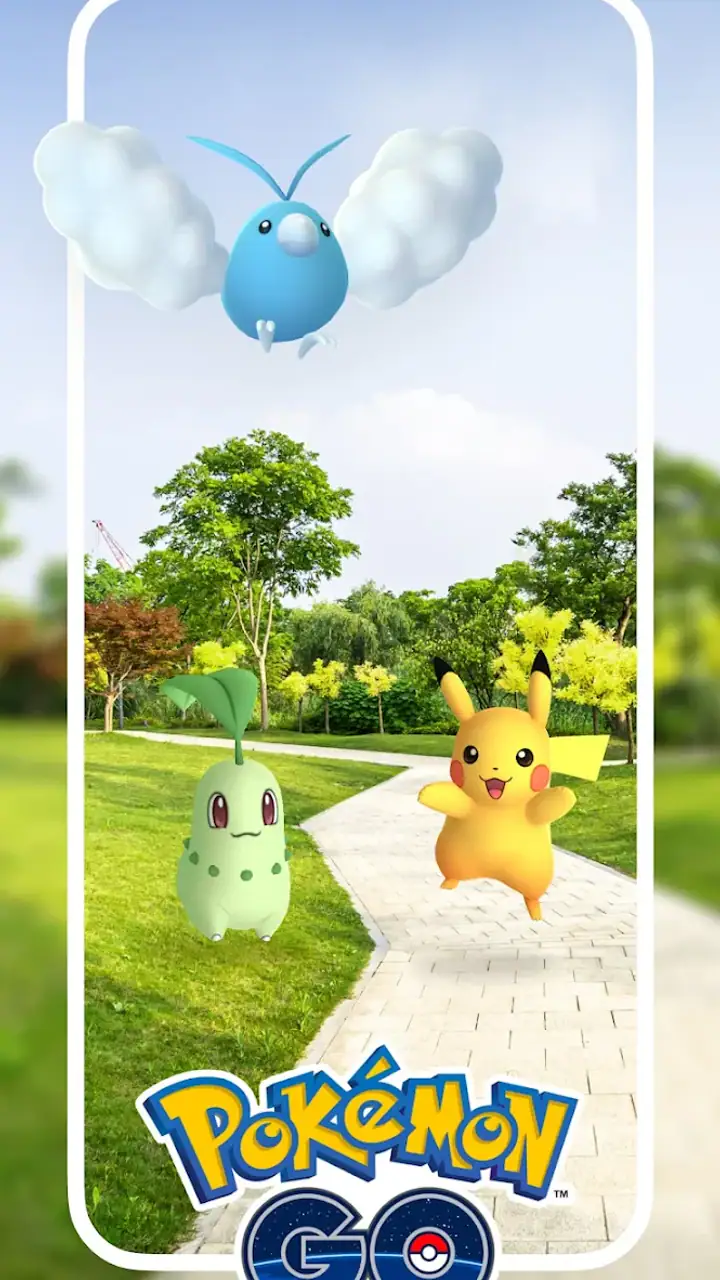
Do not feel pressured to spend money during setup. The game is free, while optional in-app purchases range from $0.99 to $99.99 per item. I recommend playing long enough to discover your own bottleneck before buying anything. Some players value extra convenience; others prefer the slower pace. Either approach is reasonable, but purchasing before understanding your storage, item use, and daily routine can make the experience feel more cluttered rather than better.
The current version is 0.391.1, and the minimum operating system is Android 9. On iOS, the practical lesson is the same as on Android: keep the operating system and the game reasonably current, and expect the experience to depend on the capabilities of the phone. A newer device is not automatically required for the idea to work, but older hardware may make location, camera, or map interactions less comfortable.
Your first successful catch and why it matters
The first catch is the clearest starting point. When a Pokémon appears, I tap it, pay attention to the capture circle, and make a controlled throw rather than repeatedly flicking at random. The goal is not to perform perfectly. It is to learn how the throw responds to timing and distance. Once the capture succeeds, I check the Pokémon’s details and collection instead of immediately chasing the next object on the map.
This is where the game’s central appeal becomes clear. A catch is not just a point on a score screen; it becomes part of a longer collection and improvement process. You begin noticing which discoveries are new, which ones are duplicates, and which resources should be saved. That creates a useful habit: before spending an item, I ask whether it helps my immediate goal or merely feels tempting because it is available.
A practical early workflow is to catch steadily during a short walk, then review the collection afterward. This is less distracting than stopping every few seconds to inspect every detail. It also helps you recognize the difference between collecting for enjoyment and optimizing every decision. For a first-time player, I would prioritize learning the interface and building a comfortable routine over trying to make every throw or resource choice perfect.
Another small but valuable tip is to keep an eye on storage rather than waiting until it becomes a surprise. Collection games create a natural temptation to keep everything, but limited space can force decisions. I find it easier to review duplicates during a quiet moment at home than while standing on a crowded pavement. That simple separation between exploring and organizing makes the game feel calmer.
How to read the map without getting lost in it
The map is the game’s main source of context, but it can also be the first source of confusion. New players may assume every visible element deserves immediate attention. It does not. I treat the map as a suggestion of nearby possibilities, not a checklist that must be cleared before I can enjoy the session.
When I am walking somewhere, I use the game as a secondary activity. I keep my route and safety first, then interact when I am stopped. This approach has two benefits: it avoids unsafe screen use, and it prevents the adventure from becoming a stressful race between icons. Pokémon GO is at its best when discovery feels incidental, such as finding something during a normal walk rather than rearranging the entire day around a single appearance.
The location-based design also means the experience can vary from one neighborhood to another. A player in a dense urban area may encounter more activity within a short walk, while someone in a quieter area may need more patience or longer trips. That is not necessarily a flaw, but it is an important trade-off. If you want a game with identical opportunities wherever you sit, this will feel less predictable than a traditional offline adventure.
Common confusion about progress, items, and spending
The game presents several kinds of progress, and they do not all mean the same thing. A larger collection can be satisfying even when your strongest Pokémon have not changed much. Likewise, gaining experience does not automatically mean you are ready for every challenge. I recommend deciding what “success” means for you: filling gaps in the collection, improving a favorite Pokémon, exploring new places, or simply making a walk more enjoyable.
Items can make the early interface seem more complicated than the basic catching loop. My rule is to use things when they solve a clear problem, not because a notification tells me they are available. If you are unsure, continue catching and exploring until you understand what you repeatedly run out of. That gives you a better basis for deciding whether a purchase would genuinely help.
The optional purchases are also where the free-to-start model deserves an honest look. You can begin without paying, which makes it easy to test the game properly. However, players who want to accelerate collection or reduce certain forms of waiting may feel tempted by the shop. I would set a personal spending limit before browsing it. The game is much easier to judge when you know whether you enjoy its normal pace.
Another common misunderstanding is expecting the game to behave like a purely solo adventure. You can play at your own pace, but the world-facing design naturally encourages awareness of other players and shared places. If you prefer a private story with a fixed sequence, a conventional adventure game may suit you better. If you like the idea that your surroundings affect what happens, this unpredictability is one of its strongest qualities.
Making the first week useful instead of overwhelming
During the first week, I would choose one repeatable route and one occasional destination. The route teaches consistency: you learn where the game fits into your day without making every session an expedition. The destination provides variety and helps you decide whether exploration itself is part of the appeal. This two-route approach is more informative than playing one unusually long session.
I would also separate three activities that are easy to mix together: catching, reviewing, and learning. Catching is best while moving safely, reviewing is easier when you are stationary, and learning comes from trying one unfamiliar action at a time. Treating them separately reduces menu fatigue and makes it easier to notice which parts you actually enjoy.
For a realistic everyday scenario, imagine a fifteen-minute walk to meet a friend. I would open the game before leaving, catch what appears while stopped, and ignore anything that would require crossing a dangerous road or taking an awkward detour. At the destination, I would review the collection and decide whether any item or upgrade supports the next outing. The game adds a layer of discovery without taking over the whole meeting.
Families should pay attention to context even though the content rating is Everyone. The rating makes the game broadly approachable, but real-world movement still calls for supervision and common sense, especially around traffic, unfamiliar places, and crowded public areas. I would present it as an outdoor activity with a phone component, not as something to play while walking without looking up.
Who will enjoy it, and who should choose something else
I think Pokémon GO is a strong match for people who enjoy collecting, light exploration, and progress that accumulates over time. It is also a good companion for walkers who want a reason to vary a familiar route. Fans of Pokémon may appreciate recognizing creatures and building a personal collection, but prior knowledge is not necessary to understand the basic loop.
It is less suitable for someone who wants a complete, uninterrupted story, precise control over every encounter, or a game that works best from one fixed indoor location. It can also frustrate players who dislike location dependence, changing availability, phone battery demands, or optional purchases appearing alongside progression. A traditional Pokémon title or a self-contained adventure may be a better choice if those concerns outweigh the appeal of real-world discovery.
Compared with ordinary adventure games, this one offers a stronger reason to move through the world but a weaker sense of authored sequence. Compared with simple collection apps, it gives the collection more context because discoveries are tied to places and routines. That trade-off is the key decision. You gain spontaneity and physical exploration, while giving up some predictability and convenience.
My recommendation after settling into the routine
After the first successful catch, the best next step is not to chase every advanced option. I would play another short route, review what I collected, and identify one personal target for the next session. That target might be discovering something unfamiliar, improving a favorite Pokémon, or simply completing a walk without constantly checking the screen. A clear small goal keeps the game welcoming.
I also recommend turning the game into a reason to notice places rather than a reason to ignore them. Stop at safe locations, look around, and let the phone become secondary. This is more than a safety tip; it improves the quality of the experience. The game’s special strength is the connection between digital collection and physical surroundings, and that connection disappears when the screen becomes the only thing you see.
The most rewarding way to play is to let Pokémon GO support a real routine, not replace one. Used that way, its free entry, approachable first catch, and long-term collection give it plenty of room to grow with you. The friction is real—location dependence, resource management, optional spending, and an interface that takes time to learn—but none of it is a deal-breaker for the right player.
My final recommendation is therefore selective but positive. Install it if you want an adventure that unfolds during walks and ordinary trips, and give yourself enough time to judge the rhythm rather than the tutorial alone. Skip it if you need a fully predictable offline experience or dislike games that connect progress to where you are. For a first-time user willing to explore carefully, Pokémon GO remains an unusually effective way to turn familiar surroundings into a continuing adventure.
FAQs for Pokémon GO
What devices are compatible with Pokémon GO?
Pokémon GO is compatible with both Android and iOS devices. For Android, it typically requires a device running Android 6 or higher with at least 2GB of RAM. For iOS, it requires an iPhone 6s or newer, running iOS 12 or later. It's important to ensure your device meets these requirements for optimal gameplay.
Does Pokémon GO require an internet connection to play?
Yes, Pokémon GO requires a stable internet connection, either through Wi-Fi or mobile data, to function effectively. The game relies on GPS and real-time data to track your movements and update the game map. Without a consistent connection, you may experience disruptions or inability to play.
Is it necessary to make in-app purchases in Pokémon GO?
In-app purchases in Pokémon GO are optional. While you can buy items like Poké Balls, Incense, and Lucky Eggs to enhance your gameplay, the game provides opportunities to earn these items through regular play. You can enjoy Pokémon GO completely without spending money, although purchases can speed up progress.
How does Pokémon GO ensure player safety?
Pokémon GO encourages safe play by providing warnings and reminders to stay aware of your surroundings. The app includes features like Adventure Sync, which tracks steps without needing to keep the app open. It's crucial to follow local laws, avoid trespassing, and play responsibly in public spaces for your safety.
Can Pokémon GO be played offline?
No, Pokémon GO cannot be played offline. The game requires continuous GPS and internet connectivity to provide real-time data for capturing Pokémon and participating in events. While you can prepare by downloading maps for certain areas, an internet connection is necessary for active gameplay.
Pros
- Engages players with augmented reality features.
- Encourages outdoor activity and exploration.
- Fosters social interactions and community events.
- Regular updates keep the gameplay fresh.
- Wide variety of Pokémon to capture and evolve.
Cons
- Drains battery quickly due to GPS and AR features.
- Requires constant internet connection.
- Can be distracting in certain environments.
- Limited gameplay options in rural areas.
- In-app purchases can be costly for some users.


